
Forex for Crypto Beginners: The Trader’s Secret Weapon Explained
Introduction: Navigating Forex as a Crypto Beginner
Starting out in crypto can feel like you’ve been handed the controls to a spaceship. All the charts, terms, and flashing numbers are just… too much.

You might be looking at a Bitcoin stock chart or checking Bitcoin on Yahoo Finance and wondering what it all really means. This feeling is completely normal. Many new investors get stuck because traditional platforms are built for experts, not beginners.
This is where understanding forex trading can be a secret weapon. At its heart, forex is about exchanging one currency for another, like trading US dollars for Euros, hoping to profit as their values change. It’s a global, decentralized marketplace, the largest of its kind in the world. Traders anticipate shifts in currency prices and take positions in these pairs.
Why does this matter for crypto? Because Bitcoin and other cryptocurrencies trade in many ways like digital currencies. The skills of analyzing trends, understanding pair dynamics, and managing risk in forex translate directly to the crypto markets. Concepts like supply, demand, and global sentiment move both markets. By learning the disciplined approach of forex, you can cut through the noise of crypto bubbles and make more informed decisions.
But you don’t need a complicated brokerage account or a day trading simulator to start learning. The key is using simplified, visual tools that explain what’s happening without the overwhelm. Instead of facing information overload, you need clarity. A platform that turns complex data into clear, quick-glance insights is crucial for building confidence.
If you’re ready to move from confusion to clarity, getting the right guidance is the best first step. For clear, step-by-step crypto education delivered simply, consider subscribing to the free Clicks and Trades newsletter. It’s a helpful resource for building your knowledge safely. As we explore further, remember that smart investing starts with understanding the fundamentals, whether you’re looking at traditional forex or the dynamic world of cryptocurrency.
What is Forex Trading and Why It Matters for Crypto Enthusiasts
Think of the world’s money as a giant, 24-hour swap meet. That’s the foreign exchange market, or forex. In simple terms, forex trading is the act of exchanging one country’s currency for another. You buy one while selling the other, hoping the one you bought will increase in value compared to the one you sold.
As experts at IG International explain, it’s always done in pairs, like EUR/USD (Euro vs. US Dollar) or GBP/JPY (British Pound vs. Japanese Yen). The first currency listed is the one you think will strengthen, and the second is the one you think will weaken. Major pairs, which include the US dollar, make up most of the trading volume. Traders, as defined by the CFA Institute, anticipate changes in currency prices and take positions based on their analysis. This all happens on a massive, global scale. It’s the largest financial market in the world, a decentralized marketplace where banks, businesses, governments, and individuals trade trillions daily.

How It Compares to Crypto Trading
At first glance, trading Bitcoin and trading Euros might seem totally different. But look closer, and you’ll see powerful similarities that make learning forex incredibly useful for your crypto journey.
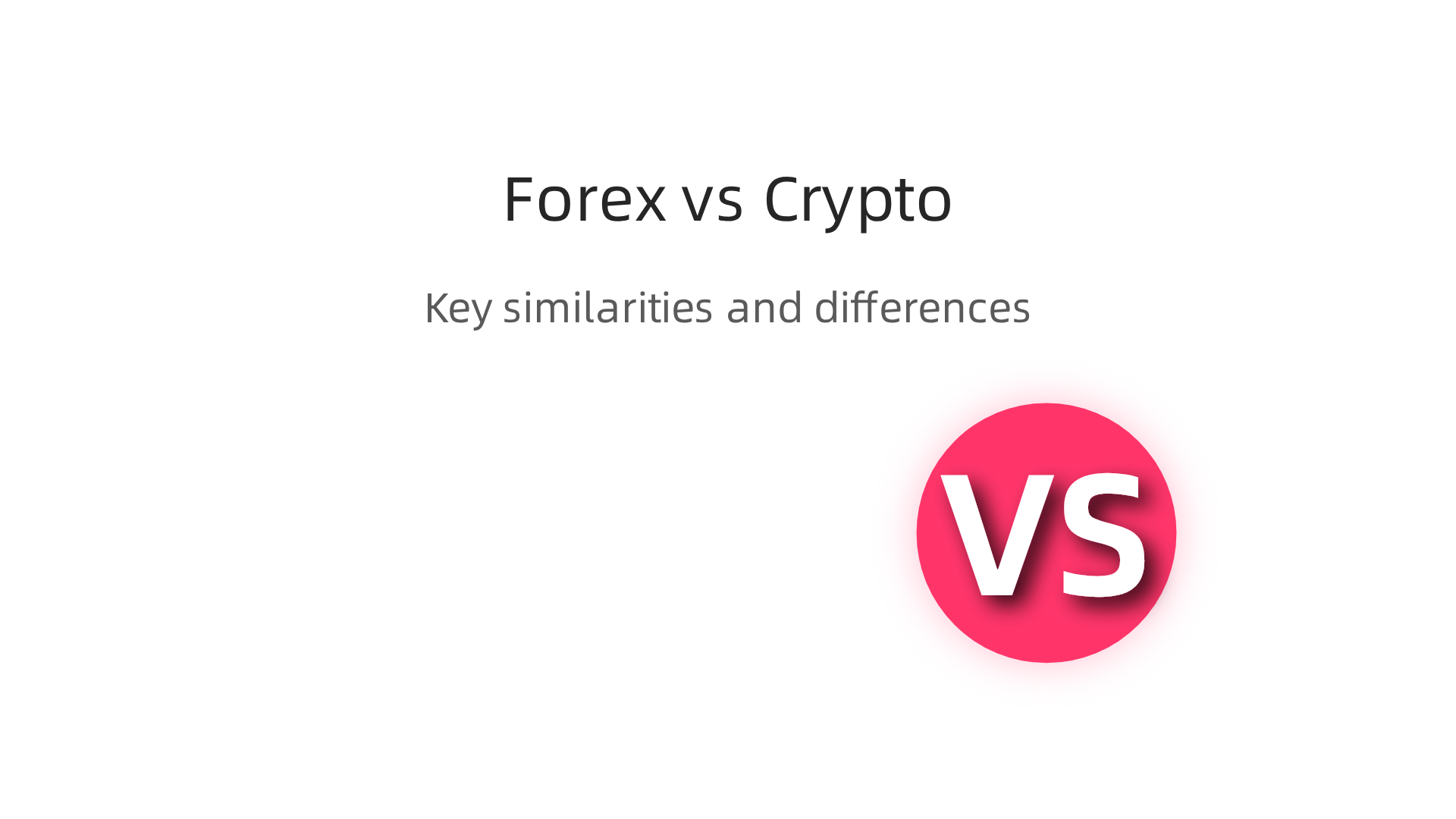
- Decentralized Markets: Both forex and major cryptocurrency markets operate in a decentralized manner. There’s no single central exchange like the New York Stock Exchange. Instead, trading happens across a global network of participants.
- Driven by Sentiment: Prices in both markets are pushed up and down by supply, demand, and collective market sentiment. News, economic reports, and global events move both currency and crypto prices.
- The Pair Mindset: While you can buy crypto with dollars (like BTC/USD), the concept of analyzing one asset against another is central to forex. This skill directly translates to evaluating how Bitcoin might move against the Euro or another cryptocurrency.
The main differences come down to trading hours and volatility. The forex market is open 24 hours a day, five days a week, following the sun across global financial centers. Crypto markets famously never close. Also, while forex can be volatile, the price swings in crypto are often much more dramatic, leading to what some call crypto bubbles.
Why Learning Forex Benefits Your Crypto Decisions
So, why should you, a crypto enthusiast, care about traditional currency trading? Because it teaches discipline and core concepts that cut through the noise.
- Master Risk Management: Forex traders live and die by managing risk. They use tools like stop-loss orders to limit potential losses on every trade. This disciplined approach is your best defense against the emotional decisions that happen during a market frenzy. Applying this to crypto can protect your portfolio.
- Understand Leverage (Safely): Leverage, or using borrowed money to increase a position, is common in forex. It amplifies both gains and losses. By understanding how it works in a more established market, you can approach leveraged crypto products with much more caution and respect.
- Spot Global Trends: Currencies react to interest rates, inflation data, and political stability. Learning to read these economic signals builds a framework for understanding the broader financial forces that increasingly influence crypto markets. You start to see connections beyond just checking a Bitcoin stock chart or a Bitcoin Yahoo Finance page.
- Practice Without Risk: The best way to learn is by doing, without risking real money. Many forex trading platforms offer free paper trading or a day trading simulator account. This is a perfect, stress-free sandbox to practice the analysis and risk management skills you’ll use in crypto. It’s a smarter first step than opening a live brokerage account and guessing. For guidance on where to find reputable platforms to practice, our checklist for choosing the best trading platforms in 2026 is a great resource.
By grasping the fundamentals of forex, you build a stronger, more analytical foundation for navigating cryptocurrency. You move from simply watching prices to understanding the "why" behind the movements. It turns chaotic charts into readable stories.
Ready to build that foundation with clear, step-by-step guidance? Continue your learning journey with simple, practical insights. Sign up for the free Clicks and Trades newsletter to get helpful crypto education delivered straight to you.
Core Principles of Successful Forex Trading
Okay, you understand what forex trading is and why it matters for crypto. Now, let’s talk about how to do it well. Successful trading isn’t about finding a secret trick. It’s about building strong, boring habits that protect your money and keep you in the game.
Think of it like building a house. You wouldn’t start without a blueprint. In trading, that blueprint is your plan.
The Trader’s Mindset: Discipline Over Emotion
The single biggest challenge in any market isn’t the charts. It’s you. The core of all trading principles is controlling your emotions. As experts point out, being rational is non-negotiable; professional traders don’t let feelings like fear or greed make their decisions for them.
This means having the discipline to follow your own rules every single time. It means having the patience to wait for your specific opportunity, instead of jumping at every little price move. A solid trading plan includes what you will trade, when you will enter, how much you will risk, and when you will exit. This plan is your anchor in a stormy market.
Understanding the Tools: Leverage, Margin, and Lots
These words sound complex, but the ideas are simple. Knowing them keeps you safe.
- Leverage: This is like using a loan from your broker to control a larger position. It can boost profits, but it also multiplies losses. Always approach leverage with great respect.
- Margin: This is the deposit of your own money needed to open and hold that leveraged position. It’s your skin in the game.
- Lot Size: This is the standardized batch size for a trade. A standard lot is 100,000 units of currency. Thankfully, most brokers allow mini or micro lots, so you can start very small.
The golden rule here is to always protect your trading capital. Never risk more on a single trade than you can afford to lose. As one principle states, the most important rule is to be intolerant of losses. Small, controlled losses are part of the business. Large, unexpected ones can end it.
The Never-Ending Job: Learning and Adapting
The market in 2026 is not the same as it was in 2025. Economic conditions shift, new patterns emerge, and your strategies need to adapt. Continuous learning is a core principle. This means reviewing your trades to see what worked and what didn’t. It means staying curious about new analysis methods, whether that’s studying classic patterns or using a modern tool.
This skill is directly useful for crypto. Whether you’re checking a Bitcoin stock chart or trying to understand a new trend, the mindset of a learner helps you cut through the noise.
You can practice all these principles risk-free. Use a paper trading account or a day trading simulator on a platform. It’s the perfect way to build your discipline and test your plan without real money on the line. For help picking a safe place to practice, our guide on choosing the best trading platforms in 2026 is a great next read.
Mastering these core principles gives you a framework that works for forex, crypto, and beyond. It turns you from a hopeful spectator into a prepared participant.
Ready to build your confidence with clear, step-by-step guidance? Sign up for the free Clicks and Trades newsletter. We deliver simple crypto education and safety tips straight to you, helping you make smarter decisions.
Risk Management: Protecting Your Capital
You’ve got the right mindset and you understand the tools. Now comes the most important skill: protecting what you have. Think of risk management as your seatbelt. You hope you never need it, but you always use it.
All the smart trading strategies in the world are useless if you lose all your money on one bad move.
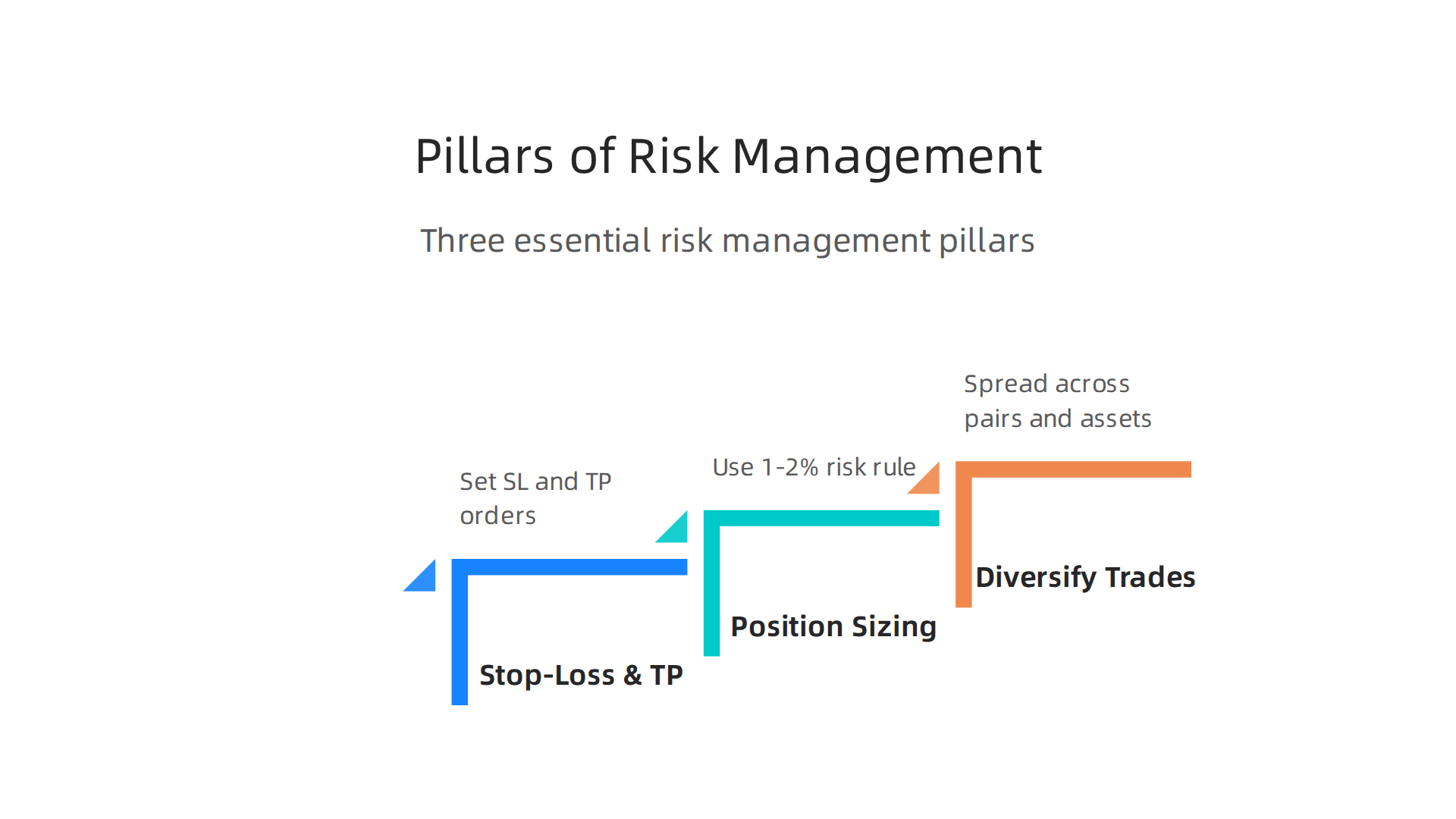
As experts note, a core principle is to predefine the risk of every single trade before you place it. This is how you turn "protecting your capital" from an idea into action.
Use Stop-Loss and Take-Profit Orders
These are your two most important automated tools. They remove emotion from your exits.
- Stop-Loss Order: This is an automatic instruction to close a trade if the price moves against you by a specific amount. It’s your pre-set pain limit. By using a stop-loss, you decide your maximum loss before you enter the trade, not while you’re panicking.
- Take-Profit Order: This is the opposite. It automatically closes a winning trade when the price reaches your target. It locks in your gain so greed doesn’t convince you to hold on for "just a little more," only to see the profit disappear.
Setting these orders for every trade is non-negotiable. It’s how professional traders maintain consistency and stay rational.
Calculate Your Position Size Smartly
How much should you risk on one trade? The answer is not "as much as possible." It’s a careful calculation.
A common rule is to never risk more than 1-2% of your total brokerage account balance on a single trade. Here’s a simple way to think about it:
- Decide your risk per trade (e.g., 1% of $1,000 = $10).
- Determine where your stop-loss will go (e.g., 50 pips away from your entry).
- Calculate your position size so that a 50-pip move against you equals a $10 loss.
This math ensures a string of losses won’t wipe you out. It makes small losses acceptable, which is key to longevity.
Diversify Your Trades
Don’t put all your eggs in one currency basket. Spreading your risk is just as important in forex trading as it is with crypto or stocks.
- Across Pairs: If you’re trading EUR/USD, consider not having a large position in another USD-based pair at the same time. They might move together and multiply your risk.
- Across Time: Don’t enter multiple trades based on the same short-term news event or chart pattern. Space them out.
- Across Asset Classes: Your overall investment portfolio shouldn’t be 100% forex. Having other assets, like the ones you might track on a bitcoin stock chart or traditional investments, provides a buffer.
True diversification helps smooth out your returns. It’s the opposite of the "all-in" mentality that creates crypto bubbles.
The best way to master these techniques is through practice. Use a paper trading account or a day trading simulator to test your risk rules. It’s the safest way to build the habit. For a hands-on start, our guide on choosing the best trading platforms in 2026 can help you find a place with great tools for simulation.
Managing risk isn’t exciting. But it’s what separates hopeful traders from prepared ones. It lets you stay in the game long enough to succeed.
Building these safe habits takes time and clear guidance. For simple, step-by-step tips on managing your crypto and forex journey, Sign up for the free Clicks and Trades newsletter. We deliver straightforward education to help you trade with more confidence and less worry.
Market Analysis: Technical vs. Fundamental
Knowing how to manage risk is your defense. Now you need an offense: a way to spot opportunities. This is where market analysis comes in. Think of it as your map and compass in the world of forex trading. Traders typically use two main types of analysis to understand the market: technical and fundamental.
Technical Analysis: Reading the Charts
Technical analysis is all about studying price charts and patterns. It’s based on the idea that history tends to repeat itself and that all current information is already reflected in the price.
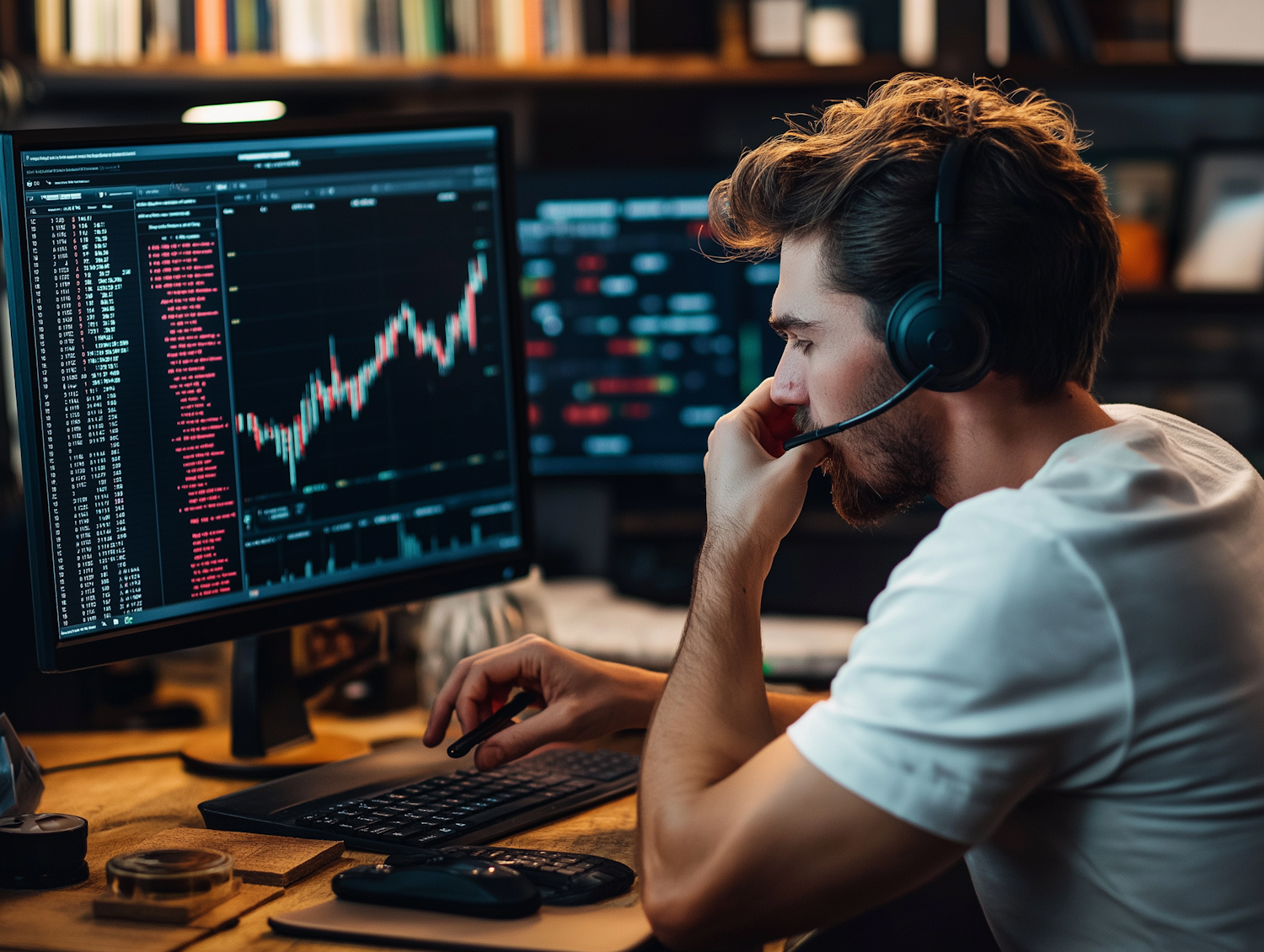
You use tools like:
- Charts: Visual maps of price movement over time.
- Trends: The general direction a currency pair is moving (up, down, or sideways).
- Indicators: Mathematical calculations based on price and volume. Simple ones help identify momentum or possible turning points.
As experts explain, the main goal is to identify trends, support and resistance levels, and good spots to enter or exit a trade. It’s a popular method for short-term trading because it helps you make decisions based on what the price is actually doing right now. You can practice spotting these patterns safely using a paper trading account or a day trading simulator.
For a visual guide on getting started, this beginner’s video on technical analysis breaks down the basics.
Fundamental Analysis: Understanding the "Why"
If technical analysis looks at the "what" (the price movement), fundamental analysis seeks the "why." It involves looking at the economic health of countries.
You examine factors like:
- Economic Indicators: Reports on interest rates, inflation, employment, and economic growth.
- News Events: Central bank announcements, election results, or geopolitical tensions.
- Market Sentiment: The overall feeling or attitude of investors in the market.
For example, if a country raises its interest rates, its currency often becomes stronger because it attracts more foreign investment. This type of analysis is crucial for understanding the bigger, long-term picture. It’s similar to checking the fundamentals of a company before buying its stock, or understanding the news that might move a bitcoin stock chart.
The Best Approach: Use Both
Many successful traders don’t choose one over the other. They combine them for a clearer picture.
Here’s a simple way to think about it:
- Use fundamental analysis to decide which currency pair to trade. Is the economic outlook for one country stronger than another?
- Use technical analysis to decide when and where to enter that trade. What does the chart pattern suggest is a good price to buy or sell?
This combined approach helps you avoid the trap of insider trading myths; you’re making decisions based on public information and clear analysis, not guesswork. For more on interpreting different types of market data, our guide on stock analysis for crypto beginners offers useful principles.
The goal is to build a complete view, so you’re not just following a line on a chart without context, or reacting to news without a trading plan. For clear, step-by-step lessons on blending these analysis methods with safe trading habits, Sign up for the free Clicks and Trades newsletter. We deliver straightforward tips to help you understand the markets.
Paper Trading: Your Risk-Free Practice Ground
You just learned about reading charts and understanding economic news. That’s your map and compass. But before you navigate the real markets with real money, you need to practice. This is where paper trading comes in.
Think of it as a flight simulator for forex trading. A paper trading account, sometimes called a day trading simulator, gives you fake money to trade with in real market conditions. It’s the single best way to build confidence and skill without risking a single dollar.
Why Paper Trading is a Must for Beginners
Jumping into live trading too soon is like learning to swim by being thrown in the deep end. Paper trading lets you get your feet wet safely. Here’s what it helps you do:
- Test Your Analysis: Try out the technical and fundamental analysis methods you just learned. See if your chart reading or news interpretation would have made a profit.
- Build Muscle Memory: Get used to the steps of placing orders, setting stops, and managing trades. The goal is to make the process automatic.
- Practice Discipline: Can you stick to your trading plan when a trade goes against you? A simulator shows you your emotional reactions without the financial pain.
- Learn Platform Tools: Every brokerage account has different buttons and charts. Use paper trading to learn where everything is so you’re not fumbling during a real trade.
As trading education resources point out, practicing with a demo account is essential for understanding strategies and building a routine before committing real capital.
How to Set Up Your Practice Account
Getting started is simple and free. Most major brokers offer a demo or practice account feature.
- Choose a Platform: Pick a reputable broker that offers a robust paper trading feature. You want a simulator that uses live, real-time market data, not delayed prices. For help evaluating your options, our guide on choosing the best trading platforms is a great place to start.
- Sign Up for a Demo Account: Look for a "Try Demo" or "Open Practice Account" button on the broker’s website. You’ll usually just need an email address to register.
- Log In and Explore: You’ll be given a virtual balance, often $50,000 or $100,000. Take an hour to click on everything. Learn how to open a chart, place a buy and sell order, and set a stop-loss.
How to Practice Effectively (Don’t Just Play Around)
To get real value, you must treat your paper account as if it’s real. Here’s how:
- Start with Real Capital: Give yourself a realistic virtual amount, like $5,000 or $10,000, not the full $100,000. This forces better risk management.
- Simulate Real Conditions: Include costs like spreads or commissions in your calculations. If a trade would cost $10 in fees on a live account, mentally subtract it from your paper profit.
- Keep a Trading Journal: Write down every trade. Why did you enter? What was your plan? What did the chart look like? Review this weekly to find your mistakes.
- Set a Practice Goal: Don’t practice forever. Aim for a specific target, like "Make a consistent 3% return over 50 trades" or "Successfully test three different strategies." Then you’re ready to go live with a micro account.
Paper trading is your safe space to fail, learn, and improve. It separates the prepared from the impulsive. Once you have a strategy that works consistently in your simulator, you’ll feel much more confident taking the next step.
For ongoing, straightforward lessons that blend market analysis with practical, safe trading habits, the free Clicks and Trades newsletter is a fantastic resource.

Sign up for clear tips delivered to your inbox to help you transition from practice to real-world trading.
Day Trading Strategies Made Simple
So you have been practicing in your paper trading account. You feel comfortable with the charts. You know how to place an order. Now what? It is time for a game plan. A simple, clear strategy is your roadmap for making decisions in the fast world of day trading. Without one, you are just guessing.
Let us look at two popular styles to understand your options, then build a simple strategy you can start with today.
Two Common Day Trading Styles
Think of these as your trading personality. One is fast and frequent. The other is slower and more patient.
- Scalping: This is the sprint. Scalpers aim to make many small profits throughout the day. They enter and exit trades in minutes, sometimes seconds, capturing tiny price movements. As explained in guides on common strategies, scalp trading involves making dozens of trades to capitalize on small bid-ask spreads and short-term momentum. It requires intense focus and quick reflexes.
- Swing Trading: This is more of a middle-distance run. Swing traders hold positions for several hours or even a few days. They aim to catch a bigger piece of a price "swing" or trend. This style gives you more time to analyze and does not require you to stare at the screen every second.
For most beginners, starting with a swing trading mindset is easier. It is less stressful and lets you think through your moves.
Your First Simple Strategy: The Trend Pullback
You do not need a complicated system with twenty indicators. Many successful traders in 2026 use clean, rule-based approaches. Here is a simple, high-probability strategy you can practice.
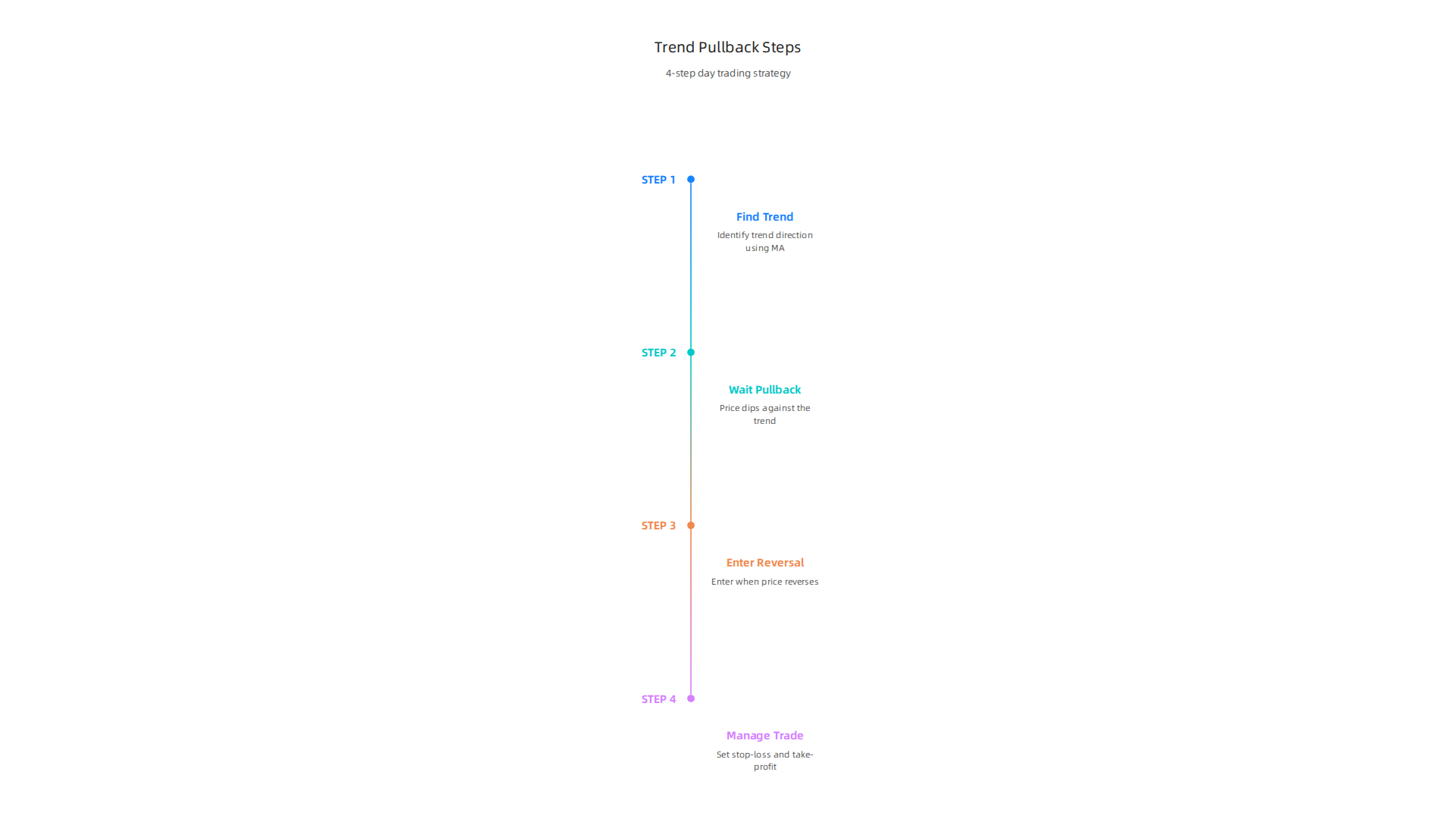
Step 1: Find the Trend.
Open your chart. Look for a currency pair or stock that is clearly moving in one direction over a few hours. Use a simple tool like the 50-period moving average. If the price is above it, the trend is likely up. If the price is below, the trend is likely down. Only trade in the direction of the trend.
Step 2: Wait for the Pullback.
Prices rarely go straight up or down. They move in waves. After a strong move in the trend direction, the price will often "pull back" or retrace slightly against the trend. Wait for this pullback to happen. You can watch for it to touch a shorter-term moving average or a key support level.
Step 3: Enter on the Reversal.
When the pullback looks like it is ending and the price starts moving back in the original trend direction, that is your signal. Place your buy (in an uptrend) or sell (in a downtrend) order.
Step 4: Manage Your Trade.
This is the most important part. Before you enter, decide on two points:
- Your Stop-Loss: Place this just below (for a buy) or above (for a sell) the recent low or high of the pullback. This limits your loss if you are wrong.
- Your Take-Profit: A good starting rule is to aim for a profit that is at least 1.5 to 2 times bigger than what you are risking. If your stop-loss is 10 points away, your take-profit should be 15-20 points away.
Time and Mindset: Your Secret Weapons
A great strategy will fail with poor execution. Your daily routine and your headspace are just as important as your charts.
- Schedule Your Session: Do not trade all day. Pick a 2-3 hour window when the market is most active for your asset, like during the London-New York overlap for forex trading. Trade only during this time. This prevents burnout and emotional mistakes.
- Warm Up and Review: Spend 15 minutes before your session reviewing the overall market. Check major news on sources like Bitcoin Yahoo Finance if trading crypto.
Look at the bigger picture. Do not just jump in.
- Limit Your Trades: Set a max number of trades for the day, like 3 or 5. Once you hit it, you are done. This stops you from "revenge trading" after a loss.
- Take Breaks: Get up and walk away from the screen every hour. It clears your mind. As beginner trading guides advise, having a clear plan and managing risk carefully are foundational habits for long-term success.
Remember, the goal is not to be right on every single trade. The goal is to follow your plan consistently. A simple strategy executed well is far more powerful than a complex one you cannot follow.
For clear, step-by-step lessons that turn these strategic concepts into daily habits, joining a community focused on education can help. The free Clicks and Trades newsletter breaks down market analysis into simple, actionable tips, perfect for applying what you just learned.
Common Pitfalls and How to Avoid Them
You have a simple strategy now. That is a huge step. But here is the thing. Knowing what to do and actually doing it are two different games. The biggest obstacles in forex trading are not the charts. They are the emotions and habits of the person looking at them.
Let us look at three common traps that catch new traders and, more importantly, how you can steer clear of them.
1. Emotional Trading: Fear and Greed in the Driver’s Seat
This is the number one challenge. After a loss, fear makes you hesitate on a perfect setup. After a win, greed pushes you to risk too much on the next trade. Your plan goes out the window.
How to avoid it:
- Automate your rules. Before you enter any trade, write down exactly why you are taking it, where your stop-loss goes, and where your take-profit is. This turns emotional decisions into mechanical ones.
- Use a simulator. If you find yourself breaking rules, go back to your paper trading or day trading simulator. Practice following your plan with no real money on the line until it becomes a habit.
- Start small. When you use your real brokerage account, trade with the smallest position size possible. This reduces the emotional weight of each decision.
2. Overtrading and Having No Real Plan
Overtrading happens when you take trades that are not part of your strategy. Maybe the market is slow, and you are bored. Maybe you just want to "be in the action." This is a fast way to turn small losses into a big one. As experts note, having a clear trading plan is a fundamental tip for beginners.
How to avoid it:
- Define your "A+ Setup." Know the exact conditions your strategy requires. If the market does not offer it, do not trade. It is okay to have zero trades some days.
- Set a daily trade limit. As mentioned earlier, decide on a maximum number of trades per day (like 2 or 3) and stick to it. This stops revenge trading after a loss.
- Schedule your time. Do not sit in front of screens for 8 hours. Trade during your most productive, focused window and then walk away.
3. Ignoring Risk and Chasing Losses
This pitfall combines the first two into a dangerous cycle. You have a losing trade. Instead of accepting the small, planned loss, you remove your stop-loss hoping the market will turn. It gets worse. Then, you enter another quick trade to try to win back the money you just lost. This is called "chasing losses," and it can wipe out an account.
How to avoid it:
- Respect the stop-loss. Your stop-loss is your lifeguard. It is not a suggestion. Once it is hit, the trade is over. Protecting your capital is more important than any single trade.
- Risk a tiny percentage. Never risk more than 1-2% of your total trading capital on any single trade. This way, even a string of losses won’t devastate your account.
- After a loss, step back. If you take a loss, close the platform for a bit. Go for a walk. Chasing a loss almost always means abandoning your plan, which is when the real damage happens.
The common thread in avoiding all these pitfalls is a commitment to your system. Your plan is your anchor. For ongoing guidance that helps you build discipline and spot quality setups, getting clear, daily analysis is key. The free Clicks and Trades newsletter delivers simplified market insights directly to you, helping you stay focused on your strategy and avoid these common emotional traps.
Ready to trade with more confidence? Sign up for free insights today.
Essential Tools for Beginner Forex Traders
You have your mindset and a plan to avoid common pitfalls. That is your foundation. Now, you need the right gear to execute your plan effectively. Think of tools as your trading assistants. They help you see the market clearly, stay informed, and keep your money safe. For beginners, the right tools reduce stress and help you make decisions based on data, not guesswork.
Here are the three essential categories of tools you need to set up in 2026.
1. Charting Platforms and Simplified Trackers
This is your main workstation. A good charting platform lets you see price movements, draw trend lines, and spot patterns for your strategy. Many brokers offer their own platforms, but you can also use standalone software.
For beginners, the key is to start simple. Look for clean, user-friendly interfaces. If you feel overwhelmed by a complex professional platform, consider using a simplified visual tracker first to build your confidence. These tools are designed to show you what is moving the market without all the technical noise. This clarity-first approach helps you understand trends before jumping into deep analysis.
Whether you are practicing with a day trading simulator or using a real brokerage account, your charting tool is your most important visual aid. For a deeper look at what makes a good platform, check out our beginners checklist for choosing trading platforms.
2. Economic Calendars and News Aggregators
Forex prices move on news. An economic calendar is your schedule for these market-moving events. It shows you when major reports, like employment numbers or central bank announcements, are released. As experts note, economic calendars are indispensable tools because they help you anticipate volatility and avoid trading blind.
Pair your calendar with a reliable news source. You do not need ten tabs open. Find one or two trusted aggregators that give you clear, timely updates. Knowing the "why" behind a price move is a powerful part of fundamental analysis. This skill in interpreting news and data is valuable across markets, as discussed in our guide on cutting through noise with smart analysis.
3. Your Regulated Broker: The Foundation of Safety
This is not just a tool. It is your partner. Your broker holds your funds and executes your trades. Choosing a safe, regulated broker is the single most important decision for protecting your capital.
Always verify a broker’s regulatory status with official financial authorities in your region. A regulated broker must follow strict rules on how it handles your money, which is a critical layer of security. As a practical guide from Saxo Bank suggests, choosing a reliable broker is the first practical step. Be sure to also secure your account properly. Many beginners make simple but costly security errors, which you can learn to avoid in our article on common broker login mistakes.
The right tools do not make you a profitable trader by themselves. But they give you a clear view of the market, keep you informed, and ensure your trading environment is secure. This lets you focus on what matters: executing your plan with discipline.
For ongoing, simplified insights that help you use these tools effectively, the free Clicks and Trades newsletter delivers clear market analysis directly to your inbox. It is a great way to stay focused without the overwhelm.
Ready to build your toolkit with confidence? Sign up for free insights today.
Summary
This article explains how learning forex trading gives crypto newcomers practical skills to read markets, manage risk, and trade with discipline. It starts by defining forex and showing why currency-trading concepts—pairs, sentiment, and leverage—translate directly to Bitcoin and other cryptocurrencies. The piece covers core principles like a trader’s mindset, leverage, margin and lot sizing, then focuses on actionable risk management: stop-losses, position-sizing rules (1–2% risk), and diversification. It compares technical and fundamental analysis and recommends combining both, and emphasizes paper trading as a risk-free way to build muscle memory. You’ll also get a simple, repeatable day-trading strategy (trend pullback), common pitfalls to avoid, and a checklist of essential tools including charting platforms, economic calendars, and how to choose a regulated broker. The article closes with practical next steps and resources to practice and keep learning safely.