
Choosing the Best Trading Platforms in 2026: A Beginner’s Checklist

Introduction
Feeling lost in the crypto world? You are not alone. The cryptocurrency landscape in 2026 is more crowded, complex, and fast-moving than ever before. With new coins, shifting regulations, and an overwhelming number of platforms vying for your attention, it is easy for newcomers to feel paralyzed before they even begin.

Reports highlight that a surge of new retail traders is entering the market, contributing to significant monthly trading volumes and adding to the digital asset industry’s rapid growth.
Here is the thing. Your success does not start with picking the next big coin. It starts with a much more fundamental choice: picking where you will trade. Choosing the right platform is the single most important decision for your entire investment journey. A good platform acts as a sturdy bridge, letting you cross safely into the world of investing. A confusing or insecure one can make you stumble before you even take your first step.
This guide exists to cut through the noise. We will not just list platforms. Instead, we provide clear, evidence-based criteria tailored specifically for new investors. We will look at the essentials you need in 2026: safety, ease of use, educational resources, and transparent fees. Think of it as learning how to choose the right tools before you start building.
To make an informed choice, a good first step is learning how to choose the right Bitcoin tracker, as monitoring your assets clearly is a cornerstone of confident investing.
The good news? You do not have to navigate this alone. For ongoing, step-by-step guidance delivered in plain English, consider joining a free resource like the Clicks and Trades newsletter.

It is packed with practical crypto education and safety tips to help you build confidence. Ready to start your journey on solid ground? Sign up for free and take the first step toward clarity.
Understanding Cryptocurrency Trading Platforms: A Primer
So, you are ready to start your crypto journey. Great. But before you look for the best trading platforms, you need to understand exactly what they are and why your choice matters so much.
Think of a cryptocurrency trading platform as your digital gateway. It is the website or app where you can buy, sell, and hold digital currencies like Bitcoin and Ethereum. It is different from a traditional brokerage account you might use for stocks. While an E*TRADE platform focuses on company shares, a crypto platform is built specifically for digital assets that trade 24/7 on a global market.
In 2026, these platforms are not just simple exchanges. They are becoming sophisticated hubs. Industry reports note that cross-border systems combining various digital assets are a major focus, reflecting how integral these platforms are to the modern financial system.
For a beginner, your platform plays three make-or-break roles:
- Your Security Guard: A trustworthy platform protects your money and digital coins with strong encryption, secure logins, and often keeps most assets in offline "cold storage." Avoiding common broker login mistakes every crypto beginner makes starts with choosing a platform that prioritizes security.
- Your Access Point: This is your door to the market. The best trading platforms give you clear, simple access to buy and sell. They also provide tools to track your portfolio’s performance, which is why pairing your platform with a good tracker is so helpful.
- Your First Teacher: The market can be volatile and confusing. A good platform for beginners offers learning resources, demo accounts, and clear guides. Practicing with an eToro demo account, for example, is a classic way to learn without risking real money.
At its core, every platform provides four essential functions:
- Buying: Converting your local currency (like dollars or euros) into cryptocurrency.
- Selling: Converting your cryptocurrency back into local currency or into a different digital coin.
- Storing: Safely holding your cryptocurrency in a built-in digital wallet.
- Tracking: Allowing you to monitor price changes, your portfolio value, and market trends.
Getting comfortable with these basics is the first step to confident investing. For ongoing, simple lessons that explain these concepts without the jargon, joining a free resource like the Clicks and Trades newsletter can be a huge help. It is designed to cut through the complexity with step-by-step guidance. Ready to build your knowledge from the ground up? You can sign up for free today.
Security: The Non-Negotiable Foundation
Think about your regular online bank account. You expect it to be a fortress, right? The same goes for your crypto trading platform. In fact, security is not just a feature of the best trading platforms. It is the foundation everything else is built on. A flashy interface or low fees mean nothing if your assets are not safe.
Here are the essential security features you must look for in 2026.
1. Two-Factor Authentication (2FA): Your First Line of Defense
This is a simple but powerful tool. It requires two pieces of information to log in, usually your password and a unique code from an app on your phone. It stops hackers who might have stolen your password. Always turn on 2FA the moment you open an account.
2. Cold Storage: Where Your Crypto Sits Safely
The best platforms keep most user funds in "cold storage." This means the crypto is stored offline, completely disconnected from the internet. It is like keeping your most valuable jewels in a bank vault instead of at home. Hackers cannot reach it there.
3. Insurance and Regulation: Your Safety Net
Look for platforms that are licensed and comply with regulations. In 2026, frameworks like the SEC’s rules in the US and MiCA in the EU provide clearer rules for platforms to follow. A regulated platform is more likely to have strong safeguards and may even have insurance that can cover losses from a breach. Recent guidance from the SEC clarifies how these laws apply to crypto assets, adding another layer of oversight.
Common Threats and How Platforms Protect You
You might worry about threats like phishing emails that try to trick you into giving away your login details. A secure platform combats this with advanced monitoring and by educating users. Remember, avoiding common broker login mistakes is a team effort between you and your platform.
Choosing a platform with these security features is the smartest first trade you can make.

For ongoing, simple tips on staying safe in crypto, getting clear guidance is key. The free Clicks and Trades newsletter breaks down security and other complex topics into easy, step-by-step lessons. You can sign up for free to start building your knowledge securely today.
Fee Structures: Understanding the True Cost
You found a secure platform. Great. But what is it really costing you? Fees can quietly eat into your profits, turning a winning trade into a break-even one. Understanding the true cost is what separates savvy users from frustrated ones. A recent survey noted that market volatility in 2026 is making investors of all sizes pay closer attention to their total costs.
Let’s break down the common fees you’ll see on the best trading platforms.
1. The Spread: The Invisible Cost
This is the difference between the buying price and the selling price of an asset. If you buy Bitcoin at $70,000 and the sell price is $69,950, that $50 difference is the spread. It’s how many platforms make money without charging a separate commission. The tighter the spread, the better for you.
2. Trading Commissions: The Flat Fee
Some platforms charge a small percentage or a flat fee every time you execute a trade. This is common on platforms that act more like a traditional brokerage account.
3. Deposit and Withdrawal Fees
Moving money on and off the platform can cost you. Bank transfers might be free, but credit card deposits often have high fees. Withdrawing crypto to your personal wallet may also incur a network fee.
4. The Hidden Costs
Watch for inactivity fees, monthly account fees, or high costs for premium features and data. Some platforms offer advanced research tools for free, which adds value. Learning basic stock analysis for crypto can help you use those tools effectively.
Here is a simple look at typical fee ranges:
| Fee Type | Typical Range | Good to Know |
|---|---|---|
| Spread | 0.1% – 1.0% | Can be higher on less popular tokens. |
| Trading Commission | 0% – 0.5% per trade | Some platforms offer zero-commission trades. |
| Crypto Withdrawal | Network fee + possible platform fee | Always check before moving your coins. |
How to Calculate Your True Cost
Your total cost depends on how you trade.
- High-Frequency Trader: If you make many trades, a low spread and zero commission are crucial. Those small fees add up fast.
- Buy-and-Hold Investor: You might care more about low deposit fees and security. A slightly higher spread on your few trades matters less.
Think of it this way: a platform with a slightly higher fee might offer an amazing etoro demo account or superior educational resources that save you from costly mistakes. That value is part of the equation too.
Getting clear on fees removes a major source of stress. For straightforward lessons on navigating costs and other crypto basics, the free Clicks and Trades newsletter is a great resource. You can sign up to make smarter, more confident decisions with your money.
User Interface & Ease of Use: Clarity Over Clutter
Now you know what a trade costs. Next, you need a place where you can actually place that trade without getting lost. A confusing screen can make you second-guess everything. In 2026, the best trading platforms know that a clean, simple interface isn’t a luxury. It’s a necessity.
Think of it this way. You wouldn’t drive a race car on your first lesson. You start with clear controls and a simple dashboard. The same goes for trading. Look for these three things in a platform’s design.
Intuitive Navigation
You should find what you need in seconds. Your portfolio, the trade button, and your watchlist should be easy to spot. Platforms praised for great user experience in 2026, like BingX, focus on this intuitive layout so you’re not hunting for buttons. A messy layout is a common broker login mistake every crypto beginner makes that leads to frustration.
Clear Data Visualization
Charts should be easy to read. Price movements should be clear at a glance. The goal is to understand the story the data is telling, not to decode a complicated graph. As user experience experts note, simplifying complex information is key to a good trading app. A platform that offers a clean, visual-first approach, similar to a good Bitcoin tracker, helps you spot trends without the noise.
Simplified Order Placement
Buying and selling should be straightforward. A good platform will have a clear order box where you can easily type in how much you want to trade and see the total cost before you confirm. Some of the best day trading platforms for beginners in 2026 are built specifically to make this process fast and error-free.
Learning Built Right In
The best platforms teach you as you go. Look for little tutorial pop-ups, a clear FAQ section, or short videos explaining features. A recent review of beginner platforms highlighted SaintQuant for weaving educational resources right into the experience. This turns the platform from just a tool into a teacher.
Your Trading Pocket Companion
You’ll check prices on your phone. A lot. A great mobile app is non-negotiable. It should let you do the important things quickly: check your balance, see charts, and execute a trade if you need to. The design should feel natural in your hand, not like a shrunk-down, complicated desktop site.
A smooth interface removes fear and builds confidence. It lets you focus on your decisions, not on fighting the software. For ongoing tips on using these tools and other clear, step-by-step crypto guidance, the free Clicks and Trades newsletter is a fantastic help. You can sign up to learn in a simpler, less stressful way.
Available Cryptocurrencies: Balancing Variety and Focus
A list of 500 coins can be exciting. It can also be completely overwhelming. For a beginner, the number of cryptocurrencies a platform offers is a big decision. Do you want a giant supermarket of digital assets, or a carefully curated corner store?
The best trading platforms for beginners in 2026 understand this dilemma. They offer a balance between variety and focus to match different goals.
The Case for a Curated Selection
Many top beginner platforms start you with a smaller, well-chosen list. This usually includes the giants like Bitcoin (BTC) and Ethereum (ETH), plus a handful of other major, established coins. A curated list has big benefits for you.
- Less Research Overload: You don’t have to become an expert on hundreds of projects overnight. You can focus on learning the fundamentals of a few key assets.
- Better Liquidity: Major coins are easier to buy and sell quickly without the price moving against you. As recent market data shows, Bitcoin and Ethereum together still command over 70% of the total market’s attention, meaning they are the most liquid and widely traded assets.
- Lower Volatility Risk: While all crypto is volatile, brand-new or obscure coins can have extreme, unpredictable price swings. Sticking to a platform’s core list helps you avoid the riskiest corners of the market.
When More Variety Makes Sense
Maybe your goal isn’t just to buy Bitcoin. You might be curious about specific blockchain ecosystems or new innovations. In that case, a platform with a wider array, like some popular brokerage accounts, could be useful later on.
However, more choice means more responsibility. Each new asset requires its own research to understand its purpose and risks. As noted in institutional surveys, the increasing diversity of the crypto asset class means investors must be more selective than ever. You can’t possibly research them all well.
How to Choose What’s Right for You
Ask yourself a simple question: What is my main goal right now?
- Goal: Learn and build confidence. Start with a platform that offers a solid core of 10-20 major coins. Master trading and understanding those first. This focused approach is similar to using a good Bitcoin tracker to understand market basics before branching out.
- Goal: Explore specific new technologies. If you’ve done your homework on a particular sector (like decentralized finance or gaming), you may need a platform that supports those niche tokens. Be prepared for deeper research.
The right platform gives you room to grow without drowning you in options from day one. For clear, step-by-step guidance on researching any asset, from Bitcoin to new altcoins, our guide on stock analysis for crypto can help you cut through the noise. And for ongoing tips on navigating these choices safely, consider joining the free Clicks and Trades newsletter. You can sign up for straightforward advice delivered to your inbox.
Customer Support: Your Lifeline When You Need Help
You’ve chosen your first few coins on one of the best trading platforms. You’re ready to trade. But what happens if you can’t log in, a transaction seems stuck, or you just have a simple question?
This is where customer support becomes your most important tool. For a beginner, good support isn’t a luxury. It’s your safety net. Leading reviews in 2026 consistently evaluate customer service as a critical factor when ranking platforms.
Look for Multiple Ways to Get Help
The best trading platforms offer more than just an email address you may never hear back from. You want options.
- Live Chat: This is often the fastest way to solve urgent problems. A real person can guide you step-by-step in real time.
- Email & Help Tickets: Good for less urgent, detailed questions. Check if the platform promises a response time, like "within 24 hours."
- Phone Support: While less common in crypto, some top brokerage account providers offer it. It’s valuable for complex account issues.
- Self-Help Hub: A well-organized FAQ and knowledge base lets you solve problems yourself, anytime. Look for clear articles and guides.
Speed and Solutions Matter Most
It’s not just about having a contact page. What matters is how quickly and effectively they fix your problem. In a fast-moving market, waiting days for an email reply isn’t good enough. Platforms that prioritize support will have teams ready to help you quickly, reducing your stress. A common issue for new users is trouble with their account access; learning how to avoid common broker login mistakes can prevent many support calls before they happen.
Don’t Underestimate Community and Learning
Beyond direct help, the best platforms support you by helping you learn.
- Community Forums: These are gold. You can ask other users for advice and learn from their experiences. Often, someone has already had your exact question.
- Educational Content: Platforms with blogs, webinars, and tutorials show they want you to succeed, not just trade. This proactive support builds your confidence.
When you’re comparing platforms, don’t skip the support section. Read recent user reviews about their help experience. Knowing someone has your back makes the whole journey less intimidating and more secure. For continued learning and straightforward safety tips delivered to your inbox, consider joining the free Clicks and Trades newsletter. You can sign up in seconds for clear, helpful guidance.
2026’s Top Cryptocurrency Trading Platforms for Beginners: A Comparative Overview
Now that you know what features to look for, let’s see how some of the leading platforms stack up. Choosing where to start is a big decision. The good news is that in 2026, several major platforms have refined their services to be more welcoming to newcomers than ever.
This shift is partly driven by broader adoption. Major surveys show growing interest, with institutional investors globally increasing their allocations to digital assets. This mainstream attention pushes platforms to build better, safer tools for everyone.
Here is a quick comparison of three standout best trading platforms for beginners, each with a slightly different focus.
| Platform | Best For | Standout Beginner Feature | Key Consideration |
|---|---|---|---|
| eToro | Social learning & copy trading | Virtual $100k eToro demo account | Higher spreads on some assets |
| Coinbase | Simplicity & security | Extremely intuitive buy/sell interface | Fees can be less transparent |
| Fidelity (Crypto) | Traditional investors | Integrated with a trusted brokerage account | Limited selection of coins |
Let’s break down what makes each one a strong contender.
eToro: Learn by Watching and Copying
eToro remains a favorite for newcomers who want to learn from others. Its standout feature is the virtual demo account, which gives you $100,000 in play money to test strategies risk-free.

Beyond that, its “CopyTrader” system lets you automatically mirror the trades of experienced investors you choose.
Standout Features:
- Practice First: The demo account is one of the best tools for building confidence.
- Social Feed: See what other traders are buying, selling, and discussing.
- User-Friendly Design: The interface is designed to be visually simple.
Potential Drawback:
While very easy to use, eToro’s fees are often built into the spread (the difference between buy and sell prices), which can be higher than on some other exchanges. It’s perfect for learning and starting small.
Coinbase: The Straightforward Standard
For sheer ease of use, Coinbase is often the go-to. Its mission is to make buying and selling crypto as simple as ordering a product online.
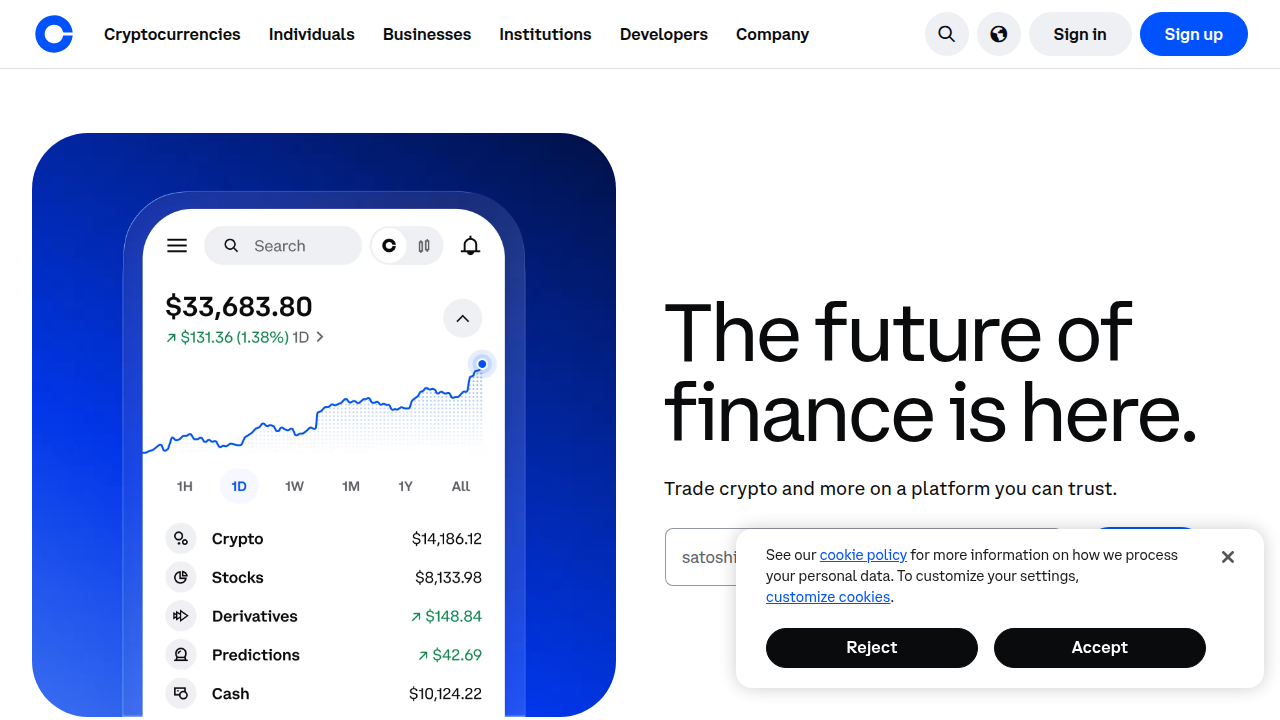
The clean app design, clear instructions, and strong security history make it a less intimidating first step. Reports note that established platforms like Coinbase are benefiting from a regulatory environment that favors compliant operators.
Standout Features:
- Simplified Buying: A few taps and you own Bitcoin or Ethereum.
- Earn While Learning: Short, free video lessons reward you with small amounts of crypto.
- Strong Security: A high percentage of digital assets are stored offline in secure vaults.
Potential Drawback:
The convenience can come at a cost. Transaction fees can be higher than on advanced platforms, and they may not always be the most obvious at checkout. It’s the price you pay for a super-smooth experience.
Fidelity Crypto: Familiarity for Stock Investors
For someone who already uses a traditional brokerage account for stocks, Fidelity’s crypto offering is a natural extension.
It brings crypto trading directly into the same trusted login and ecosystem you use for your other investments. This integration is a key example of the convergence across asset classes highlighted in recent financial trends.
Standout Features:
- One Unified Account: View stocks, ETFs, and crypto in one place.
- Institutional-Grade Security: Leverages the same custody models used for big clients.
- Focus on Education: Provides substantial, reliable learning resources for new investors.
Potential Drawback:
The selection is curated and limited. You won’t find hundreds of obscure altcoins here, just major assets like Bitcoin and Ethereum. It’s for focused, long-term investing rather than active trading of many coins.
Remember, the best trading platform for you is the one that matches how you want to learn and invest. Do you want a social experience? Choose an eToro demo account path. Do you value ultimate simplicity? A platform like Coinbase might be best. Do you want everything in one familiar place? Consider a brokerage-integrated option.
Whichever you choose, the key is to start where you feel comfortable. For continued learning with clear, simple guides sent right to you, join our free newsletter. You can Sign up for the Clicks and Trades newsletter to get helpful tips directly in your inbox.
How to Get Started: A Step-by-Step Guide to Your First Trade
You’ve picked a platform from our list of the best trading platforms. Great. Now, the moment of truth. That first trade can feel like a big step, but in 2026, the process is smoother than ever. Leading platforms have designed their sign-up to be simple and guided. A recent review even noted that onboarding for top apps can take less than 10 minutes now.
Let’s walk through it together, one easy step at a time.
Step 1: Set Up Your Account (Verification, Funding, Security)
This is your foundation. Get it right.
- Sign Up & Verify: Enter your email and create a strong password. You’ll then need to verify your identity. This is standard and required by law. Have a photo of your driver’s license or passport ready. Modern platforms use clear photo guides to help you through this.
- Fund Your Account: Link your bank account or debit card. Look for options like "Add Funds" or "Deposit." Start small. An amount you’re completely comfortable with is perfect for your first try.
- Lock Down Security: Before you do anything else, turn on two-factor authentication (2FA). This adds a crucial extra layer of protection to your brokerage account or exchange login. It’s the single best thing you can do for your account’s safety. For more on avoiding common security pitfalls, check out our guide on common broker login mistakes.
Step 2: Place Your First Market Order
A "market order" simply means "buy at the current best price." It’s the most straightforward trade.
- Navigate to the trading section and find an asset like Bitcoin (BTC) or Ethereum (ETH).
- Click "Buy."
- Select "Market" as the order type.
- Enter the dollar amount you want to spend (e.g., $25).
- Review the estimated fee and total, then confirm.
That’s it. You now own a piece of that cryptocurrency. The simplicity of this process is a key focus for the best trading platforms in 2026, with designers prioritizing clean interfaces that reduce confusion.
Step 3: Track and Learn
Your job isn’t done after the buy button. This is where learning begins.
- Watch Your Portfolio: Use your platform’s portfolio tracker. See how your investment changes in value over hours and days without stress. For a dedicated tool that simplifies tracking with clear visuals, platforms like Cryptocurrency Eye are built specifically to give beginners this clarity without overwhelm.
- Practice Risk Management: Never invest more than you can afford to lose. Diversify over time by adding different assets. This is a marathon, not a sprint.
- Keep Learning: Use your platform’s free learning center, like Coinbase’s rewards lessons or Fidelity’s resources. To continue getting simple, actionable guides delivered to you, consider subscribing to the free Clicks and Trades newsletter for ongoing tips.
Remember, every expert started with a first trade. The goal today isn’t to get rich. It’s to learn the process, build confidence, and start your journey on solid ground. Ready for the next step in understanding the market? Learn how to use stock analysis techniques to cut through crypto noise.
For a visual overview of top platform choices in 2026, this video review of the best crypto trading platforms can be a helpful resource.
Common Beginner Pitfalls and How to Avoid Them
You have an account on one of the best trading platforms. You’ve made your first trade. Now comes the real challenge: navigating your own psychology and avoiding common, expensive mistakes.

In 2026, the platforms are better, but the human errors remain the same. Let’s spot them before they cost you.
The Emotional Rollercoaster: FOMO and Panic
The market moves fast. A coin shoots up 30% in an hour, and you feel you must buy in now. This is FOMO, or Fear Of Missing Out. It makes you chase prices and buy high. The opposite is panic selling when prices dip. You sell low out of fear, locking in a loss.
The fix is simple but hard: have a basic plan. Before you buy, decide why you’re buying and when you might sell. Write it down. This turns an emotional reaction into a considered decision. Using the free demo account on a platform like eToro is a fantastic, risk-free way to practice this discipline before using real money.
Skipping Security Basics
You wouldn’t leave your front door unlocked. Why leave your brokerage account unprotected? Ignoring security is a direct ticket to loss. In 2026, regulations like the updated SEC Custody Rule demand platforms safeguard assets, but you must do your part.
This means using strong, unique passwords and always enabling two-factor authentication (2FA). Avoid clicking on suspicious links promising free crypto. A 2026 report on illicit crypto trends shows scams are still rampant. For a deeper dive on securing your access, our guide on common broker login mistakes is essential reading.
Chasing "Guaranteed" High Returns
If someone promises you insane, guaranteed returns with no risk, run. This is often a scam or an extremely high-risk gamble disguised as an opportunity. The best trading platforms in 2026, like those rated by NerdWallet, provide tools for steady growth, not magic beans.
Sustainable investing is about steady learning and disciplined risk management, not getting rich overnight. This mindset protects you from the worst schemes.
Over-Reliance on Social Media Tips
It’s tempting to follow the crowd online. But social media is full of noise, hype, and people with hidden motives. Basing trades solely on a influencer’s tip is a recipe for trouble.
Instead, use the powerful educational tools your platform already offers. Top platforms have extensive free learning centers with courses, articles, and market analyses. This is how you build your own knowledge to use stock analysis techniques to cut through crypto noise.
Not Using the Platform’s Full Toolkit
Many beginners use their trading app like a simple buy/sell button. They miss the risk management tools, price alerts, advanced charting, and practice accounts. For instance, an eTrade platform or its crypto equivalents offer detailed research and portfolio analysis.
Platforms design these features to help you. Not using them is like buying a smartphone only to make calls.
The path forward is continuous, calm learning. For clear, step-by-step guidance that helps you avoid these pitfalls, sign up for the free Clicks and Trades newsletter. It delivers simple crypto education and safety tips straight to your inbox, helping you trade with more confidence and less fear.
Summary
This guide helps beginners pick the right cryptocurrency trading platform in 2026 by focusing on real-world needs: safety, ease of use, clear fees, educational tools, and customer support. It explains what crypto platforms do, why security (2FA, cold storage, regulation) is non-negotiable, and how fees like spreads, commissions, and withdrawal costs affect your returns. The article shows how to evaluate interfaces and mobile apps so you can place trades without confusion, and it advises when a curated coin list is better than an endless marketplace. You’ll get a short comparison of beginner-friendly platforms (eToro, Coinbase, Fidelity), a simple step-by-step walkthrough for your first market order, and practical tips to avoid common pitfalls like FOMO, weak passwords, and chasing social-media tips. By reading this, you’ll know which platform features matter most, how to calculate real costs, and how to start trading confidently and securely.