
How to Choose the Right Bitcoin Tracker in 2026: A Simple Guide
The Overwhelming World of Crypto Tracking
It feels like a full-time job just to keep up.
You open your phone and the alerts are already piling up. A major bitcoin tracker flashes a 5% price swing. Your crypto Twitter tracker feed is on fire with rumors. Someone is talking about Ethereum gas tracker data you don’t understand. Then you see a bold ripple price prediction that contradicts the xrp price prediction you read an hour ago.
Sound familiar? You’re not alone. In 2026, more people than ever are entering crypto, with nearly 30% of American adults now holding digital assets. But this surge comes with a massive problem: crippling information overload.
New investors face a storm of data, complex jargon, and non-stop noise. This constant flood isn’t just annoying, it’s harmful. Research from 2026 highlights the psychological impact of this overload, leading to decision fatigue and emotional strain. You might spend hours staring at a bitcoin price tracker and a crypto market cap calculator, but still feel unsure of what to do next.
Here’s the thing. Most existing tools are built for experts, not beginners. They are packed with advanced charts, confusing terms, and features you’ll never use. Trying to use them can feel like trying to fly a spaceship when you just want to drive a car. This complexity is a major barrier. It’s why even large institutions are seeking simpler, more disciplined ways to manage crypto volatility in 2026.
The result? People make avoidable mistakes, like common broker login errors beginners face, or they simply give up out of frustration. When your bitcoin calculator confuses you more than it helps, something is wrong.
There’s a critical need for a different approach. We need tools that cut through the chaos, offering simplicity, clear visuals, and intuitive insights. The goal isn’t more data, it’s the right data, presented in a way that makes sense at a glance.
If this struggle feels familiar, you’re in the right place. For clear, step-by-step guidance that helps you cut through the noise, consider joining our free newsletter. You can sign up here for straightforward crypto education and safety tips delivered simply.
What Is a Bitcoin Tracker and Why Do You Need One?
In the simplest terms, a bitcoin tracker is a tool or platform that follows the price and other key data of Bitcoin in real time. Think of it like a specialized weather app, but for the crypto market. It shows you the current "temperature" (price), the forecast (trends), and any major storms (volatility) headed your way.
Beyond just a simple bitcoin price tracker, the best tools often function as a broader crypto calculator. They let you see your portfolio’s total value, calculate potential profits or losses, and understand metrics like the overall crypto market cap. For example, a 2026 guide on crypto analytics notes that aggregators like CoinMarketCap are fundamental for this kind of baseline market data, tracking thousands of tokens and their vital statistics.
How a Bitcoin Tracker Helps You Make Better Decisions
You need a dedicated tracker to cut through the chaos we just talked about. Here’s how it helps:
- It Provides a Single Source of Truth: Instead of frantically checking ten different apps or your crypto Twitter tracker feed for conflicting ripple price predictions, a good tracker gives you a calm, centralized dashboard. It replaces noise with clean data.
- It Turns Data into Understanding: A great tracker doesn’t just show numbers. It uses clear charts and visual cues to answer the "so what?" For instance, it can help you see if a dip is a minor blip or part of a larger trend, which is more valuable than any single xrp price prediction.
- It Manages Your Entire View: You can watch Bitcoin while also keeping an eye on other assets like Ethereum (maybe using an ethereum gas tracker for network insights) and your overall portfolio performance. This holistic view is key to avoiding emotional, knee-jerk reactions.
As noted in a 2026 comparison of portfolio trackers, these tools empower you with features like real-time value tracking and comprehensive analytics, moving you from feeling overwhelmed to feeling informed.
Tracker vs. Trading Platform: A Key Difference
This is a crucial point for beginners. A bitcoin tracker or crypto portfolio tracker is for watching and analyzing. A trading platform or exchange is for buying and selling.
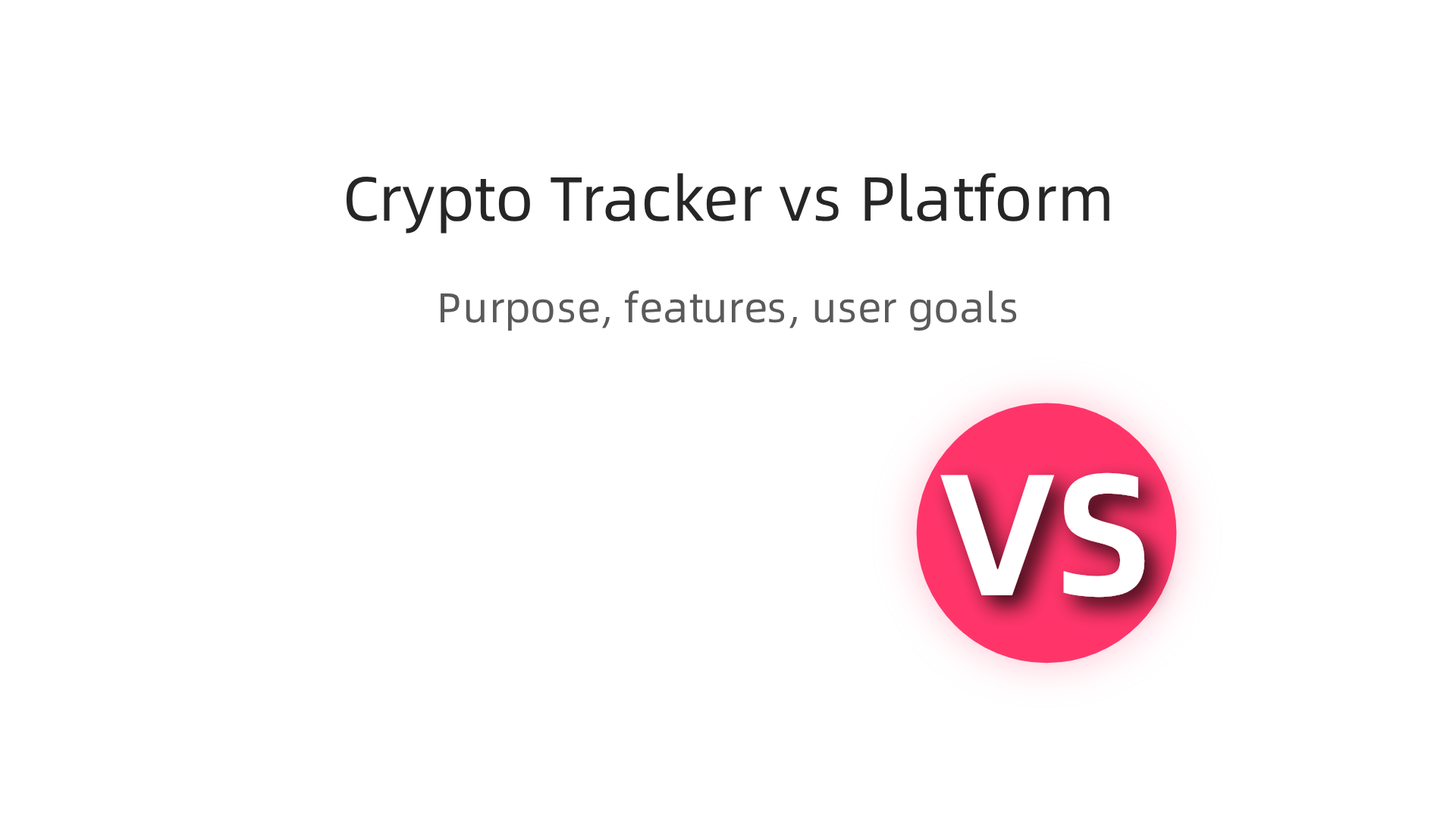
- Trackers are for insight. Their goal is to give you clarity. They help you decide if you should buy, sell, or hold. They focus on research, charts, and portfolio health. You can use a great bitcoin calculator to model different investment scenarios without risking a single dollar.
- Trading platforms are for action. Their goal is to execute your trades. They are built with order books, buy/sell buttons, and wallets.
Mixing the two can be overwhelming. Professional traders might use a complex platform for everything, but beginners often benefit from separation. Use a simple, visual tracker like Cryptocurrency Eye to understand the market landscape with clear, beginner-friendly charts. Then, when you’ve made a confident decision, you go to your exchange to act.
This separation reduces panic and promotes smarter, more disciplined investing. It turns the market’s chaos from a threat into a map you can actually read.
If the idea of a simpler, calmer way to track your crypto sounds right for you, our free newsletter is designed to help. We deliver step-by-step guidance and plain-English tips straight to your inbox. You can Sign up here to get started.
Essential Features to Look for in a Crypto Tracker (For Beginners)
You know you need a good bitcoin tracker. The market’s volatility in 2026 makes it essential, as institutional surveys show investors getting much more disciplined in response to recent turbulence. But with so many options, how do you pick the right one? A bad choice can make you feel more lost, not less.
The best tracker for a beginner isn’t the one with the most complex charts. It’s the one that makes you feel calm and in control. As a 2026 psychological study on crypto investing highlights, simplifying your tools is a key strategy for combating the decision fatigue and emotional strain caused by information overload.
Here are the three non-negotiable features to look for when choosing your first crypto portfolio tracker.
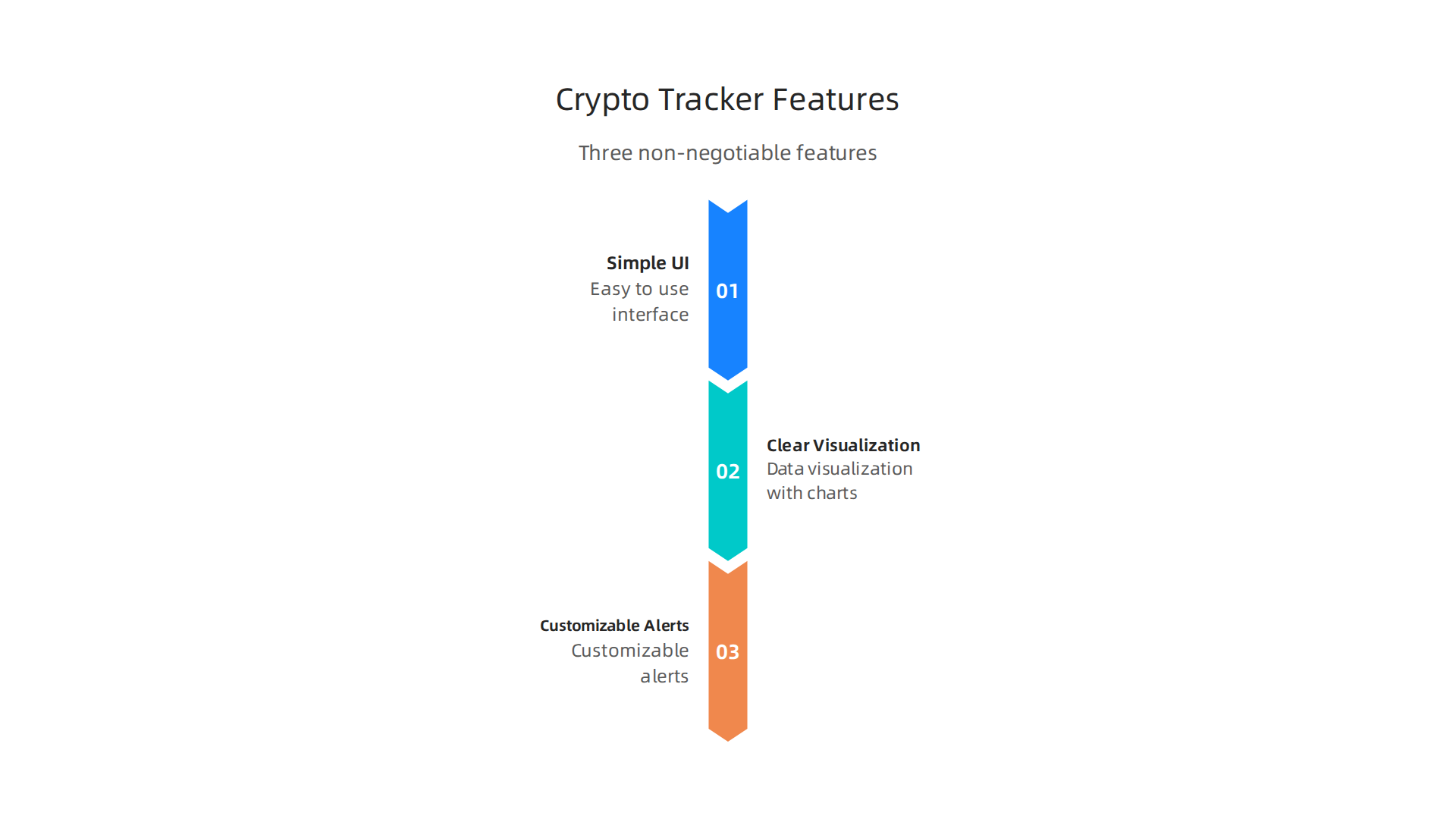
1. A Simple, Intuitive User Interface (UI)
If you have to spend ten minutes figuring out where the price is, you’ve already lost. A beginner-friendly tracker should feel welcoming, not like a cockpit. Look for a clean layout with clear labels. The most important information, like the current Bitcoin price and your portfolio’s total value, should be front and center.
This is a major trend in 2026. Platforms are aggressively simplifying their user experience because they know that a confusing interface is the biggest barrier for new users. A tool designed for clarity, like Cryptocurrency Eye, focuses on giving you a quick-glance understanding without overwhelming menus or technical clutter. The goal is to help you see the signal, not get lost in the noise of a hundred different data points.
2. Clear Data Visualization Through Charts and Graphs
Numbers alone are hard to understand. A great bitcoin price tracker turns those numbers into a picture you can instantly grasp. Look for clean, easy-to-read charts that show price movements over different time periods (like 1 day, 1 week, 1 month). Color-coding for positive (green) and negative (red) movements is a basic but vital feature.
The best tools also integrate helpful calculators. A built-in bitcoin calculator or crypto market cap calculator lets you model "what-if" scenarios. For example, you can see how a 10% price change would affect your holdings. As noted in a 2026 guide, these calculators are powerful for measuring potential growth and making more informed plans, rather than guessing. The principle, as highlighted by major financial institutions, is about turning a flood of data into a clear visual advantage you can actually use.
3. Customizable Alerts and Notifications
You can’t and shouldn’t watch the charts all day. That’s a fast track to stress. The right tracker works for you while you live your life. Set it up to send you a quick notification only when something important happens.
Look for a tracker that lets you set alerts for:
- Price Targets: Alert me if Bitcoin hits $X.
- Major Percentage Moves: Alert me if any asset in my portfolio goes up or down by 5% in 24 hours.
- Volatility Warnings: Some trackers can flag periods of high market volatility.
This feature is about discipline. It helps you stick to your plan. Instead of reacting to every tiny dip you see on a crypto Twitter tracker, you let the tool notify you of the meaningful events you decided on in advance. This turns your tracker from a source of anxiety into a trusted assistant.
Choosing a tracker with these three features will set you up for success. It provides the calm, visual, and automated insight you need to navigate the crypto market with more confidence and less panic.
To keep learning about managing your crypto investments with less stress, our free newsletter breaks down concepts just like this. We deliver clear, step-by-step guidance to help you make sense of the market. You can Sign up for free to get the next issue.
Types of Crypto Tracking Tools: Trackers, Calculators, and Aggregators
Now that you know what features make a great bitcoin tracker, let’s look at the bigger picture. In 2026, the tools you can use fall into three main categories. Each one serves a different purpose in your investing journey.
Think of it like this: a simple tracker is your daily dashboard. A calculator is your planning notebook. And an aggregator is your research library. You might use one, two, or all three, depending on your goals.
1. Real-Time Price Trackers and Portfolio Monitors
This is the classic bitcoin tracker or crypto portfolio tracker. Its main job is to show you what’s happening right now. You connect it to your exchange accounts or enter your holdings manually. Then, it gives you a live view of your portfolio’s total value and how each asset is performing.
These tools are perfect for the daily check-in. They answer simple questions like, "What’s my Bitcoin worth today?" or "How is my Ethereum doing this week?" The best ones, like those recommended in guides for the best crypto portfolio trackers in 2026, sync across devices and send you the customizable alerts we discussed earlier.
For beginners who want clarity without complexity, platforms that focus on visual simplicity are key. They turn overwhelming data into a clear picture you can understand at a glance, helping you cut through the noise of the market.
2. Profit/Loss Calculators and Tax Estimation Tools
This is where a bitcoin calculator or crypto calculator becomes your best friend. While a tracker shows you the current price, a calculator helps you plan and understand the past.
Imagine you bought Bitcoin at one price and sold it at another. A profit/loss calculator will instantly tell you your exact gain or loss, including fees. More advanced tools can estimate your potential tax liability. This is crucial because, as noted in many 2026 platform reviews, dedicated crypto tax features are often missing from basic trackers.
These calculators are powerful for measuring growth. For example, you can use them to model different scenarios, like a ripple price prediction or xrp price prediction coming true. As highlighted in a 2026 investment guide, the Bitcoin investment calculator is one of the most powerful tools for measuring Bitcoin’s price growth potential. A crypto market cap calculator can also help you understand a project’s size relative to others.
3. News and Analytics Aggregators for Market Sentiment
Sometimes, you need to know why the price is moving. This is where aggregators shine. They pull together data, news, social media chatter, and advanced charts from all over the web into one place.
You can think of a crypto Twitter tracker as a simple form of this. But full aggregators are much more powerful. They help you gauge the overall mood or "sentiment" of the market. Are people excited or fearful? Is there major news breaking?
In 2026, sites like CoinMarketCap and CoinGecko remain go-to sources for this broad view.
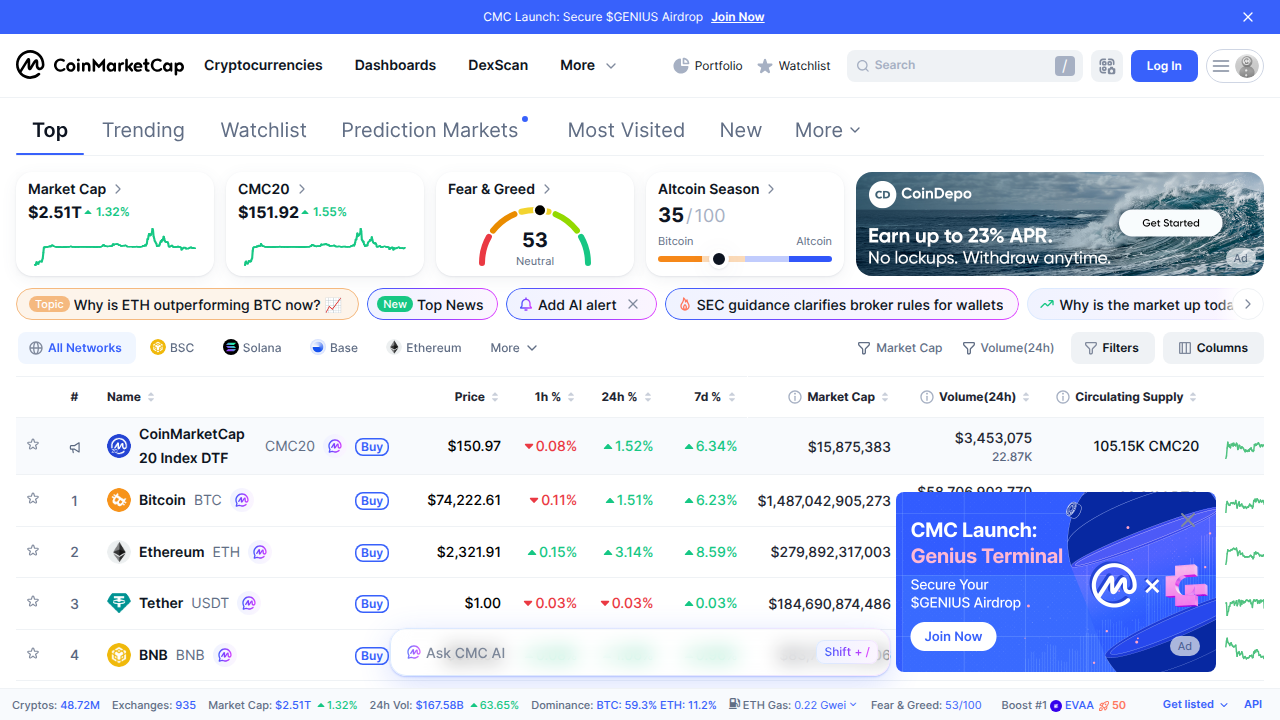
As noted in a review of the best crypto analytics tools for 2026, CoinMarketCap is the most widely used aggregator for baseline data on thousands of tokens. These platforms help you research new coins, compare metrics, and see the whole market at once, not just your personal portfolio.
Choosing the right type of tool depends on your question. Need a simple snapshot? Use a tracker. Need to calculate a profit or plan for taxes? Use a calculator. Want to research why the market is moving? Use an aggregator.
For a steady stream of helpful tips on using these tools and navigating crypto with confidence, our free newsletter breaks it all down in plain language. You can Sign up for clear, step-by-step guidance delivered to your inbox.
Trust and Security: How to Evaluate a Crypto Tracker’s Reliability
Now you know the three main types of tools. But here is the next big question.
How do you know which bitcoin tracker or bitcoin price tracker won’t let you down? You are trusting these apps with sensitive information. You might connect your exchange accounts. You might enter details about your holdings.
In 2026, checking a tool’s trust and security is just as important as checking its features. Let’s look at what makes a tracker reliable.
Your Data’s Safety: Security and Privacy Protections
A good tracker protects your information like a vault. Here are the security features you should look for.
- Strong Encryption: This is a must. Your data should be encrypted both when it’s being sent (in transit) and when it’s stored on their servers (at rest). Look for mentions of industry-standard encryption.
- Read-Only Access: The best portfolio trackers use "read-only" API keys when connecting to your exchange. This means the tracker can only see your balances and trades. It cannot move, withdraw, or trade your crypto. This is a critical safety layer.
- Two-Factor Authentication (2FA): You should be able to protect your tracker account with 2FA. This adds a second step, like a code from your phone, when you log in. As security experts note, using 2FA is a fundamental step for securing any financial account.
- Clear Privacy Policy: A trustworthy provider will have a clear, easy-to-find privacy policy. It should explain what data they collect, how they use it, and if they share it with third parties. You want a tracker that values your privacy.
Signals of a Trustworthy Provider
Beyond the tech, look at the company behind the tool. Trust is built on reputation and transparency.
- Long Track Record and Positive Reviews: How long has the service been around? A platform with a history of reliable service is a good sign. Check independent review sites and community forums. See what other users are saying about their experience.
- Transparent Team and Company Information: Can you easily find out who built the product? Legitimate companies are usually open about their founding team, their mission, and their contact information. Be cautious of completely anonymous projects.
- Active, Helpful Support: Test their customer support before you fully commit. Send a question. See how quickly and helpfully they respond. Good support shows they care about their users. For more on avoiding common pitfalls with financial platforms, our guide on broker login mistakes every crypto beginner makes is a useful read.
- Regular Updates and Communication: A reliable provider regularly updates its app to fix bugs and add security improvements. They also communicate clearly about any issues or scheduled maintenance.
Regulatory Compliance and Industry Standards
The crypto world is maturing. In 2026, following rules and standards is a mark of a serious business.
- Licensing and Registration: Depending on where the company is based, it may hold financial service licenses. While not all trackers need a full broker license, operating as a registered business in a known jurisdiction is a positive signal.
- Independent Audits: Some of the most secure services undergo regular security audits by independent third-party firms. These audits check for vulnerabilities in their code and systems. Companies that publish these audit reports are showing extra commitment to security.
- Industry Best Practices: The provider should follow general cybersecurity best practices. This includes things like secure data centers, routine security training for staff, and having a clear plan for handling data breaches. Many of the principles for securing your crypto assets, like avoiding public WiFi, also apply to the companies you trust with your data.
Choosing a bitcoin tracker is about more than flashy charts. It’s about finding a partner you can trust with your financial snapshot. Look for strong security, a transparent team, and a commitment to safety standards.
For a steady stream of helpful security tips and plain-language guides on using these tools safely, our free newsletter breaks it all down. You can Sign up for clear, step-by-step guidance delivered to your inbox.
The Future of Crypto Tracking: Trends Shaping 2026 and Beyond
Now that you know how to pick a trustworthy bitcoin tracker, let’s look ahead. The tools you use today are evolving fast. In 2026, the best bitcoin price trackers are becoming smarter, more convenient, and more connected than ever. Here are the key trends that will define your tracking experience.
Smarter Insights with Artificial Intelligence
Artificial Intelligence (AI) is no longer a buzzword. It’s the engine powering the next generation of crypto tools. AI is being integrated into crypto analytics tools to provide personalized insights that save you time and cut through the noise.
Instead of you staring at charts all day, your bitcoin tracker might learn your habits. It could alert you only when a significant pattern forms on your watched assets. It could summarize complex on-chain data into plain English. Or, it could use a crypto calculator powered by AI to model different investment scenarios based on historical trends. As noted in industry reports, AI in crypto operations is a top trend for 2026, helping to filter signal from noise. This connects back to building good habits; using smart tools is a great way to avoid the common broker login mistakes every crypto beginner makes by relying on automated, secure alerts instead of frantic manual checking.
Tracking On-The-Go with Mobile-First Design
Crypto never sleeps, and neither do you. The future of tracking is in your pocket. Developers are focusing on slick, powerful mobile apps that give you the full power of a desktop dashboard from your phone.
Imagine checking a live ethereum gas tracker, getting a ripple price prediction alert, and reviewing your portfolio’s total crypto market cap all during your morning commute. The trend is clear: fintech apps that simplify crypto access are booming. As highlighted in trend analyses, the shift towards mobile convenience is a major force, making sophisticated tracking accessible to everyone. The best apps will offer a seamless experience where your data and alerts sync perfectly across all your devices.
Connecting to Everything: DeFi and Multi-Chain Support
Your crypto isn’t just on one exchange anymore. It’s in decentralized finance (DeFi) pools, on various blockchains, and in NFT wallets. Modern trackers are evolving to see your entire financial picture.
The leading crypto tracker in 2026 won’t just connect to Coinbase or Binance. It will let you import wallets from Ethereum, Solana, and other networks. It will track the value of your staked assets and liquidity pool tokens automatically. This deep integration with the broader crypto ecosystem, including DeFi, is a key part of the market’s growth, as forecasted by experts. This means your crypto calculator will finally show your true, complete net worth across every chain and protocol, not just your exchange balance.
Staying on top of these trends is key to using your tools effectively. The goal is to work smarter, not harder. For a steady stream of insights on how to use these evolving tools, from crypto Twitter trackers to AI-powered alerts, our free newsletter breaks it all down in simple terms. You can Sign up for clear, step-by-step guidance delivered to your inbox.
How to Choose the Right Bitcoin Tracker for Your Needs: A Step-by-Step Guide
Feeling overwhelmed by the hundreds of bitcoin tracker apps and websites out there? You are not alone. The sheer number of options can lead to serious decision fatigue, a common challenge for crypto investors. Choosing the right tool is not about finding the most complex one. It is about finding the one that fits you. Here is a simple, step-by-step guide to help you pick the perfect bitcoin price tracker for your goals in 2026.
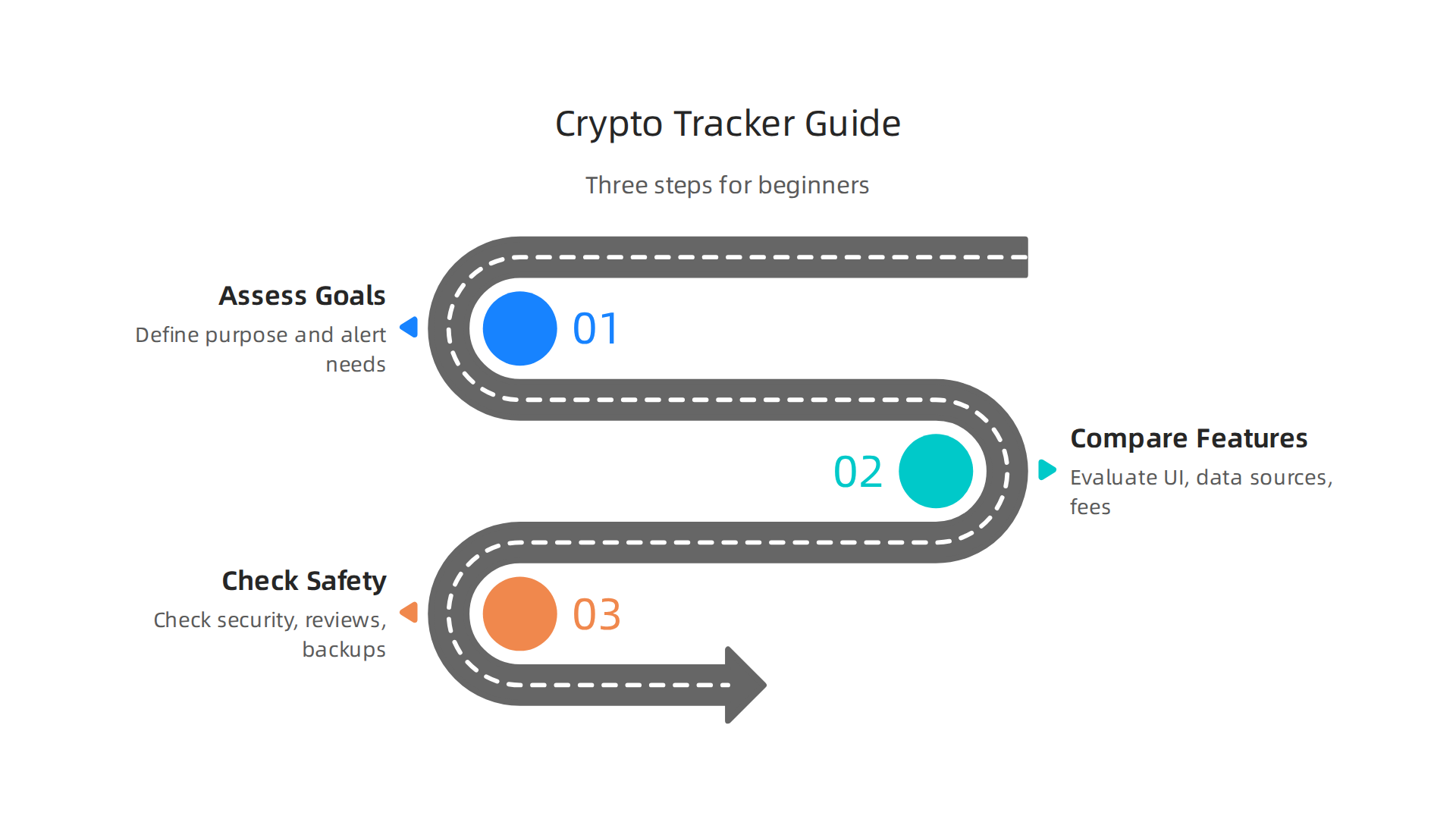
Step 1: Be Honest with Yourself (Assess Your Goals & Experience)
Before you compare a single feature, look in the mirror. Ask yourself two simple questions:
- What is my main goal? Are you a long-term holder (HODLer) just wanting to check your portfolio’s value? An active trader needing real-time alerts and deep charts? Or a curious beginner trying to learn the ropes?
- What is my experience level? Be real. If you are new, a platform packed with advanced trading terminals and futures charts will only confuse you. You need clarity, not complexity.
This self-assessment is crucial. A 2026 report highlights that turning "data overload into data advantage" is key for modern investors. Your bitcoin tracker should simplify information, not add to the noise. If you are just starting out, avoiding information overload is your first win. It also helps you steer clear of other common beginner errors, like the broker login mistakes every crypto beginner makes.
Step 2: Shop for Features, Not Just Brand Names (Compare Tools)
Now, with your goal in mind, you can shop smart. Do not just download the most popular app. Look for these features that match your needs:
- For the Long-Term Holder: You need a clean portfolio tracker. Look for automatic sync with your exchanges and wallets, a simple crypto calculator to see your total gains, and maybe basic alerts for big price swings. Support for multiple assets (beyond just Bitcoin) is a plus.
- For the Active Trader: You need power. Look for advanced charting (like TradingView integration), real-time crypto market cap data, customizable alerts for technical indicators, and maybe a built-in crypto Twitter tracker to follow sentiment. Tools like crypto screeners can help you find new opportunities.
- For the DeFi User: You need multi-chain support. Your tracker must connect to Ethereum, Solana, and other networks to see your staked assets, LP tokens, and NFT values. An integrated ethereum gas tracker is a useful bonus.
- For Everyone: Usability is king. Is the interface clean and intuitive? Can you find what you need in three clicks? A cluttered design will make you quit.
Reading expert reviews of the best crypto portfolio tracker apps and best crypto charting software in 2026 can give you a great shortcut in this comparison step. It is like having a friend who has already tested them all.
Step 3: Do Your Safety Homework (Check Security & Reviews)
This step is non-negotiable. You are trusting this tool with your financial data. Do not skip the background check.
- Investigate Security: Does the tracker require only "read-only" API keys to connect to your exchange? (This is a must. It means they can see your balance but cannot move funds). Do they use strong encryption and two-factor authentication (2FA) for your account? Reputable security guides consistently stress the importance of using strong passwords and 2FA for any financial tool.
- Read User Reviews: Go beyond the app store. Search for the tracker’s name on forums and social media. Are users complaining about missing transactions, bad customer support, or sudden fees? Real user experiences are a powerful warning system.
- Check for Transparency: Is the company behind the tool clear about who they are? Do they have a privacy policy that explains how they use your data? A trustworthy provider has nothing to hide.
Following these three steps will filter out the bad options and lead you to a tool that feels like it was made for you. The right bitcoin tracker becomes a helpful assistant, not another source of stress. It gives you the visibility you need to make confident decisions, which is the foundation of good stock analysis for crypto beginners.
The best tool is one you will actually use consistently. For a steady flow of simple, trustworthy advice on using your tracker and building smarter crypto habits, our free newsletter is here to help. We break down the complex into clear, step-by-step guidance. You can Sign up for free to get started.
Summary
This article explains how to cut through crypto information overload by using the right bitcoin tracker and related tools. It defines what a tracker does, contrasts trackers with trading platforms, and shows why beginners need simple, visual tools rather than feature-heavy apps. You’ll learn the three essential features to prioritize—intuitive UI, clear charts, and customizable alerts—as well as the three main tool types: real-time trackers, profit/tax calculators, and news aggregators. The guide also covers how to vet a provider’s security and transparency, plus practical steps to choose a tracker that fits your goals and experience. By following these recommendations you can reduce stress, make more disciplined decisions, and get a complete view of your crypto holdings.